5 Reasons to Choose a Beechcraft King Air 350i for Private Jet Travel
Share this
Introduction
If you are wondering whether the Beechcraft King Air 350i is worth considering for your next private jet journey, the short answer is yes, and for good reason. This twin engine turboprop has earned its place among business flyers because it blends comfort, flexibility and cost sense in a way that few aircraft manage. At FlyRoving, we get asked about this aircraft often, so we thought it made sense to lay out exactly why it keeps coming up as a smart pick for private travel.
What Makes the King Air 350i Stand Out
Before getting into the five reasons, it helps to understand what this aircraft actually is. The Beechcraft King Air 350i is the largest model in Beechcraft's long running Super King Air family, a line that has been in continuous production since 1974, making it the longest running civilian turboprop platform in history. That kind of track record isn't accidental. It tells you the design has been tested, refined and trusted across decades of real world flying. Now, let's get into why this particular aircraft might suit your travel needs.
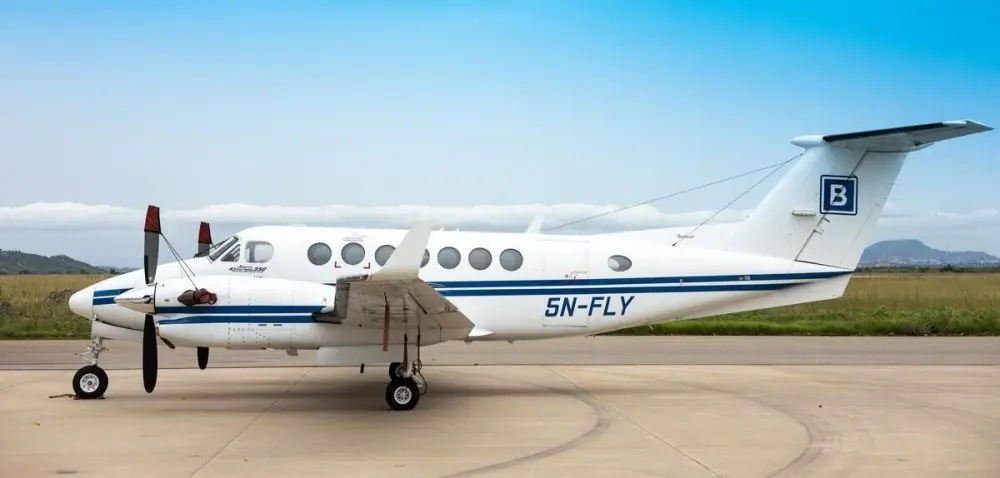
- It Can Reach Places Bigger Jets Cannot
One of the biggest advantages of choosing a King Air for private travel is its ability to land on shorter and less prepared runways. Larger jets need long, paved runways, which rules out a lot of smaller regional airports. The King Air 350i does not have that problem. Its takeoff distance sits around 3,300 feet, with a landing distance of roughly 2,692 feet, so it can get into airstrips that many private jets simply cannot use.
If your destination happens to be a small town, an island, or a business site tucked away from major airport hubs, this is where the King Air genuinely earns its keep.
Why this Matters for You
- Less time spent driving after landing
- Access to airports closer to your actual destination
- Fewer connections or ground transfers
- Solid Range Without the Fuel Costs of a Jet
A private jet doesn't always need to be a jet in the traditional sense to get the job done. The King Air 350i offers a maximum range of about 1,806 nautical miles, with a maximum cruise speed near 312 knots. That's enough to cover most regional and even some longer domestic routes without a fuel stop.
What makes this appealing isn't just the distance. It's the balance between range and running cost. Turboprops generally burn less fuel than jets of comparable size, which shows up clearly when you look at trip costs over a year of regular travel.
- The Cabin is Built for Actual Comfort
People sometimes assume a turboprop cabin will feel cramped compared to a jet. That's not really the case with the 350i. The cabin includes pull out tables, standard power outlets, a private lavatory, heated seats, advanced noise cancellation, and standard WiFi, so passengers get a working environment that feels closer to a small jet than a regional turboprop.
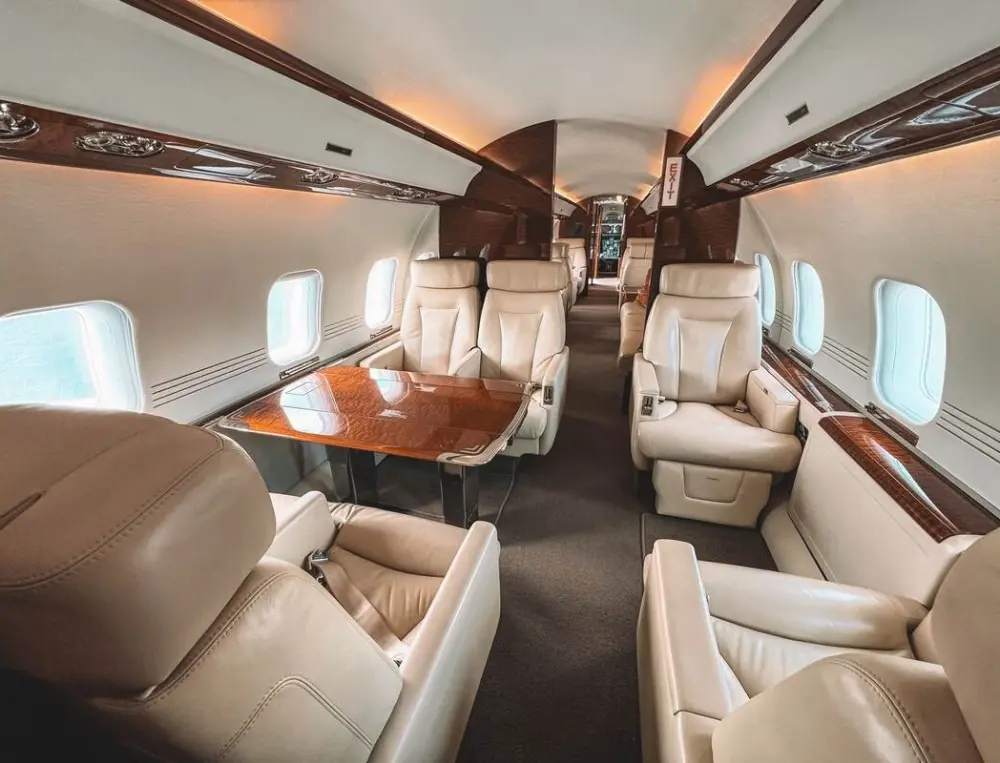
Beechcraft also gave the cabin a distinct box shaped cross section rather than the usual tube shape most aircraft use. This design choice was made specifically to give passengers better shoulder and headroom, and the additional cabin width is immediately noticeable. There's a bit more room to stretch, work, or simply sit back without feeling boxed in.
A few cabin details worth knowing:
- Seating comfortably fits up to eight or nine passengers depending on layout
- Noise levels are reduced through added insulation and dampers
- Cabin temperature can be adjusted throughout the flight
- Modern Cockpit Technology
Safety and reliability matter just as much as comfort when choosing an aircraft for regular travel. The King Air 350i's cockpit runs on the Collins Aerospace Pro Line Fusion system, which includes synthetic vision, enhanced situational awareness, and traffic alert and collision avoidance. These aren't just technical extras; they are the kind of systems that give pilots better awareness in changing weather or unfamiliar airspace, which in turn gives passengers a steadier, more predictable flight.
The aircraft is also certified for single pilot operation and is RVSM compliant, meaning it can operate efficiently within busy, regulated airspace alongside larger commercial traffic.
- Strong Value Retention & Manageable Ownership Costs
For anyone thinking beyond a single trip and considering charter or ownership, the King Air 350i holds its value reasonably well. As of recent market data, the list price for a new 350i sits around $7.4 million, while used models average close to $4.37 million. That gap gives buyers a fair bit of flexibility depending on budget and how new they want the aircraft to be.
Running costs also tend to stay lower than comparable light jets, largely because of the fuel efficiency turboprops naturally offer. Fuel burn on the 350i sits at around 96 gallons per hour at maximum cruise, dropping to about 78 gallons per hour at a slightly reduced cruising speed. Over months and years of flying, that difference adds up.
Is the King Air 350i Right for Your Next Trip?
If your travel involves shorter regional hops, visits to smaller airports, or simply a preference for a comfortable, well equipped cabin without jet level running costs, the Beechcraft King Air 350i is worth serious thought. It won't outrun a long range jet on a transatlantic route, but for most private travel within a few hours' flying time, it does the job with fewer compromises than people expect.
At FlyRoving, we have seen firsthand how often this aircraft matches what our clients are actually looking for once they weigh up runway access, comfort and cost together. If you would like to talk through whether it fits your own travel plans, we are happy to help you figure that out. Visit us at flyroving.com to get started.